


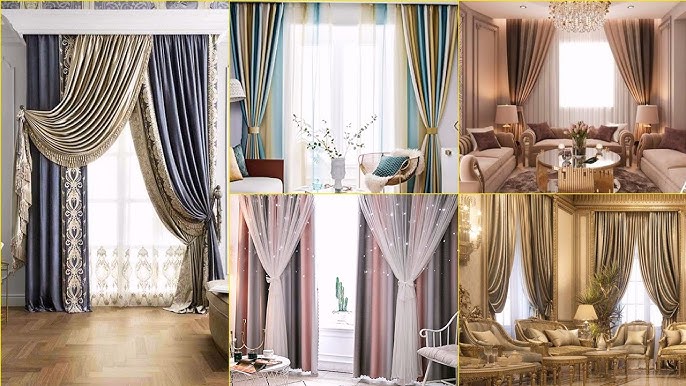


Window treatments like drapes, curtains, shades, and blinds can greatly influence the style and functionality of a room. Each type serves a different purpose and has unique features, making it important to choose the right one for your home. Many people mix up terms like drapes and curtains, but understanding the differences can help you select the best option for your space. Here are some insights into their distinct characteristics and uses to guide your decision.
The Difference Between Drapes and Curtains

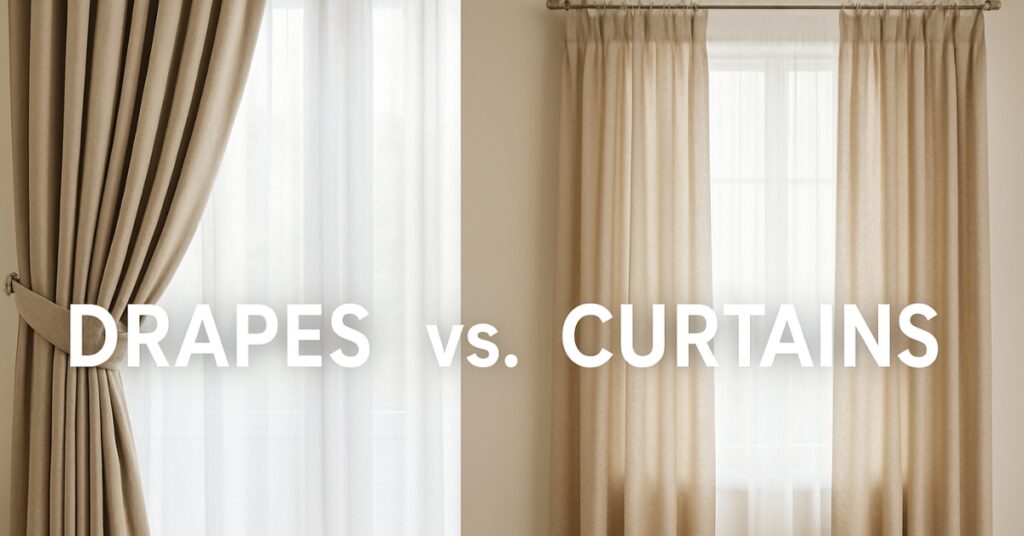
Curtains are fabric panels used to cover windows and are generally cut to fit a window or drop a few centimeters below it, whereas drapes (also fabric panels) are typically made from thick fabric and are cut to floor length or slightly puddle on the floor.
Drapes are the best choice for rooms that require room darkening or insulation qualities, as well as more ornate or formal spaces, whereas curtains are ideal for rooms that require a lighter touch or decorative element.
Drapes often block out light similar to blackout curtains, but blackout curtains are made from a layer of specific materials designed to block light.
How to Choose Between Drapes, Curtains, Shades, and Blinds

Curtains
- Best for: All rooms
- Common materials: Variety of fabrics
- Light blocking: Sheer to blackout
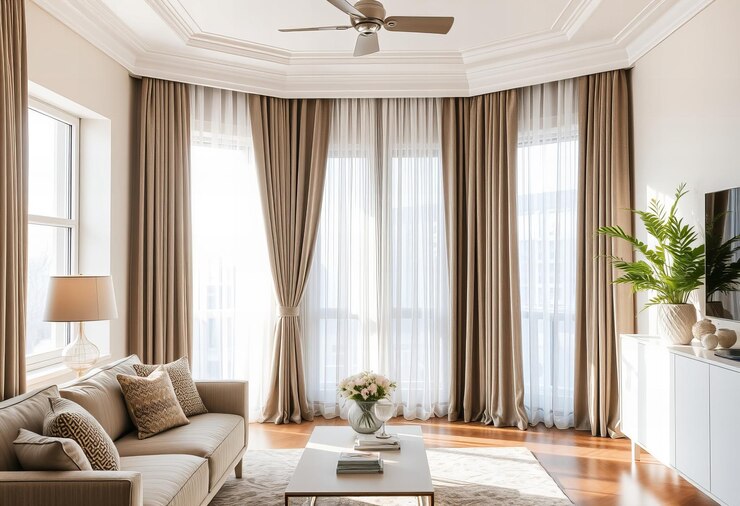
Curtains are fabric panels that are often sold and hung in pairs. You’ll find curtains in a wide range of widths, lengths, fabrics, colors, and patterns. They are best for any type of room, including the living room, as they are optimal for sliding glass doors. Curtains can soften a space, as well as add color and texture.
Curtains hang from a rod, which can be plain or decorative. They might have a fabric pocket that slips over the rod, metal grommets, fabric tabs, or use rings or hooks for attachment.
Some curtains are referred to as sheers because the fabric offers minimal light blocking and privacy, and sheer curtains that cover only the bottom half of a window are called café curtains.
Other curtains are made of heavier fabric and might be marketed as blackout curtains, as they filter out most light. Curtains can also be used with blinds or shades for optimal light blocking, especially in bedrooms.
Preempt the Mess
Curtains can attract dust or, if you have kids and pets, fingerprints and shedding fur. Make sure you know how to clean and care for your curtains properly so they always look fresh.
Drapes
- Best for: Bedrooms
- Common materials: A variety of heavy fabrics
- Light blocking: Moderate to blackout
Drapes, often lined to block light, are ideal for bedrooms. They are more ornate, usually custom-made, and add privacy and visual interest. Common materials include velvet, damask, and silk.
Drapes, sold in pairs, hang from a rod using rings, hooks, grommets, or a fabric sleeve. Available in various colors and patterns, they are usually solid or textured, projecting a formal feel with their heavy fabrics and often pleated tops.
Sometimes called draperies, these window treatments are typically long enough to reach from slightly above the window to the floor. They can even puddle a bit on the floor. However, no rule says that drapes have to touch the floor; that’s a personal style choice.
Shades
- Best for: All rooms
- Common materials: Fabric, vinyl, bamboo
- Light blocking: Moderate to blackout
Sold individually, shades typically come in various types of fabric, including materials like vinyl and bamboo. They are best for any type of room. Shades fit within the window frame, unlike drapes or curtains that hang below the sill.
To let in light and see outside, you need to raise the shade using either a cord, roller, or lifting mechanism. As the shade lifts, it either bunches or rolls around a rod, depending on the shade’s style.
Simple roller shades, as the name suggests, roll around a top rod and are inexpensive. Other types include Roman shades with deep pleats, balloon shades poufing into fabric balloons, and tie-up shades that use a tie to stay open.
While window shades can be dressy enough to use on their own, many people like to use them underneath curtains or topped with a valance. This also improves their light-blocking abilities, though shades alone can be good blackout window treatments if they’re made of a thick, lined fabric.
Blinds
- Best for: All rooms
- Common materials: Vinyl, wood, aluminum
- Light blocking: Moderate to high
Blinds consist of slats or louvers that tilt for light adjustment and suit any room, including living rooms and kitchens. Unlike shades, you don’t have to fully raise blinds to see through them; you can just tilt them open.
Standard depths for blind slats are 1/2 inch, 1 inch, or 2 inches—the latter of which are often called Venetian blinds. The length and width of the blinds are sized to fit within the window frame. While blinds with horizontal slats are most common, there are also blinds with hanging vertical slats. These are generally used on sliding patio doors or over large sliding windows.
When it comes to blinds, some light may seep through the cracks between slats and around the edges. Still, blinds are suitable for bedrooms. And you can top them with curtains to further block light.
Blinds come in different colors and wood tones, but they’re not normally patterned. Topping them with curtains or a valance will soften their rigid appearance and add some visual interest.
When to Call a Pro
It’s very easy to install curtains and drapes or blinds as long as you have a drill and measuring tape. If you’re not comfortable getting on a ladder or you have very heavy drapes or shades, you can call a handyman or a company specializing in blinds and curtains.
Things to Consider When Choosing Window Treatments

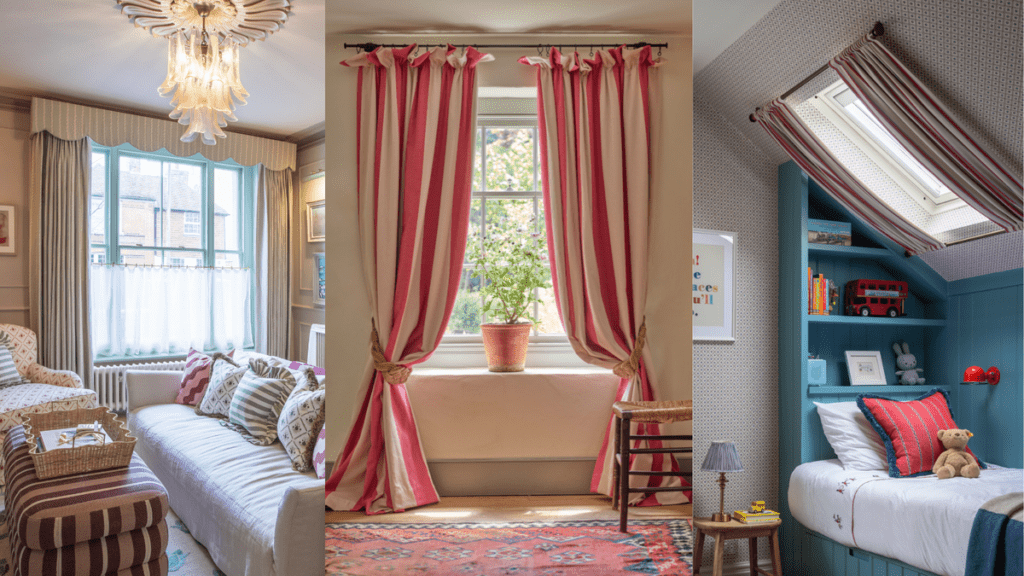
- Light Filtration: Do you want your room completely blacked out for sleeping or do you prefer to have some light seeping through? Light filtration will influence whether you buy curtains (allows more light in the room) or drapes (can be room darkening).
- Features: Think about what features are important to you. You can opt for electric blinds, for example, that can be operated automatically, or consider shades with a flame retardant material for safety purposes.
- Header Types: There are many different header types to consider, so do some research and choose one that best fits your design aesthetic and budget. For example, you can go with pleats, grommets, a rod pocket, eyelets, and more.
- Cost: Cost can vary from extremely budget-friendly to very expensive depending on the material, header type, and how much fabric is needed. For example, basic vinyl blinds are typically some of the cheapest window treatments, while wooden shutters or drapes in a luxury fabric can be some of the priciest.
- Style: Finally, you’ll want to think about your home’s design to consider which window treatment will best fit. Not only do you want to take into account aesthetics, but you’ll also want to think about function. Shorter windows will do better with shades or blinds while floor-to-ceiling windows lend themselves to curtains or drapes.